





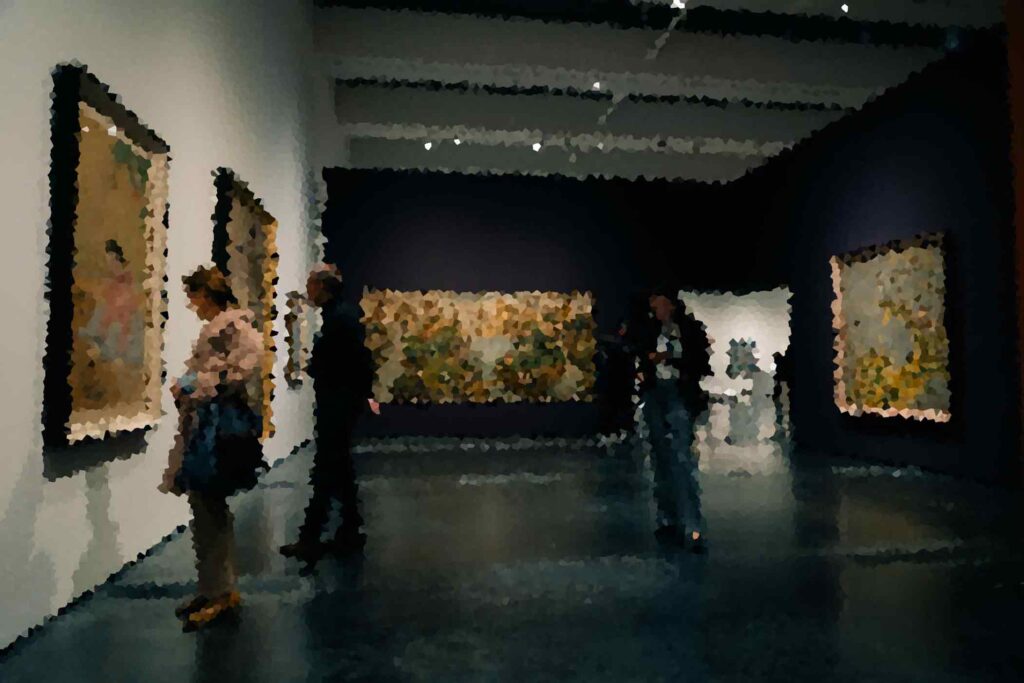
Walking through the Louvre is like stepping into a living tapestry of human creativity. Each brushstroke tells a story, and every painting holds centuries of emotion, expression, and artistic evolution.
The stillness of the museum heightens the experience. In quiet contemplation, visitors witness the power of art to transcend time, culture, and language. These works are more than just pigment on canvas—they are echoes of the past preserved for the present.
Art enables us to find ourselves and lose ourselves at the same time.
Thomas Merton
From the bold strokes of Delacroix to the delicate layers of Vermeer, every piece invites you into the mind of its creator. These masterpieces are more than objects—they are windows into the soul of history.
The Language of Paint and Light
Artists use more than images—they use language formed through contrast, saturation, shadow, and color. A single brushstroke can convey emotion more vividly than a thousand words. The Louvre allows visitors to witness how light is bent to will and how stories are woven through color alone.
Even the architecture of the museum complements this language. High ceilings, strategic lighting, and curated layouts draw your eye to the details. Paintings don’t just hang—they speak, if you know how to listen.
Moments Frozen in Time
Every great painting captures a moment—sometimes imagined, sometimes lived. The tilt of a head, the softness of a gaze, or the chaos of a battle—all are suspended forever within the frame. These aren’t just images. They are stories frozen in oil and pigment.
In this stillness, we see movement. In silence, we hear echoes. Each detail adds depth to a larger narrative, allowing us to feel closer to the artists and subjects alike.
A Journey Through Artistic Eras
As you walk through the Louvre, you don’t just move through rooms—you move through time. From ancient Egyptian frescoes to 19th-century Romanticism, the museum is a timeline told in art. Each era is a distinct chapter filled with evolving techniques, themes, and philosophies.
The transitions are seamless yet striking. You begin to understand how art has always mirrored the human experience—from devotion to revolution, from love to loss.
- Ancient and Classical Art – Celebrate structure, symbolism, and myth as early as 3,000 BCE
- Medieval Works – Devotion and religious storytelling shape this era, where the divine meets human struggle
- Renaissance – A golden age of precision, beauty, and perspective, where the rebirth of knowledge ignites a cultural revolution
- Baroque and Rococo – Experience emotion, movement, and detail at their most dramatic, captured through light and shadow
- Neoclassical and Romantic – An era of philosophy, freedom, and individuality, where art reaches new emotional depths
- Impressionism – A movement that blurred the lines between the seen and the felt, inviting the observer to experience light and motion
The Power of Presence
To witness art in person is a different experience than viewing it online or in books. The sheer scale, texture, and detail of an original piece affect you in ways that digital reproductions simply cannot. These works breathe with the energy of time, brushstrokes, and the artist’s touch.
Standing in front of a masterpiece reminds you that creativity is tangible. It was real, raw and born of human hands in a different world. There’s a certain kind of magic in that presence.
Personal Reflections in Public Spaces
Art may be displayed for the public, but the experience remains deeply personal. Each person brings their own perspective to a painting. One may find sorrow, while another sees hope. The museum becomes a space for introspection, where everyone writes their own narrative through what they feel.
That’s the quiet beauty of the Louvre—it creates collective memory from personal reflections. No two visitors see the same museum, even if they walk the same path.
Art is not what you see, but what you make others see.
Edgar Degas
Preserving the Soul of Culture
The Louvre is more than a gallery—it is a guardian of heritage. Each painting, carefully preserved, represents the cultural heartbeat of a moment in time. These works survived wars, revolutions, and centuries of change to stand here today.
Preservation is an act of respect. It honors both the artist and the society that created the art. Museums like the Louvre serve as time capsules for future generations to discover, learn from, and be inspired by.
Conclusion
Art is eternal. In the quiet corridors of the Louvre, brushstrokes whisper across time, reminding us of who we were, who we are, and who we might become. Visiting these halls isn’t just about viewing paintings—it’s about connecting to something far greater than ourselves.